Ever catch yourself clenching the steering wheel at a red light, jaw tight, because you’re mentally rewriting a sentence you haven’t even typed yet? That silent grip is perfectionism taking the wheel long before any real mistake has happened.
In my previous blog, Learning to Live with My Inner Critic, I explored how that critical voice in my head often kept me from taking steps forward. Rather than trying to silence it, I learned to live with it, listen to it, and sometimes even thank it.
But there’s another side to perfectionism: the challenge of balance. Just like listening to your inner critic takes practice, so does finding the middle way between holding on too tightly and letting go completely.
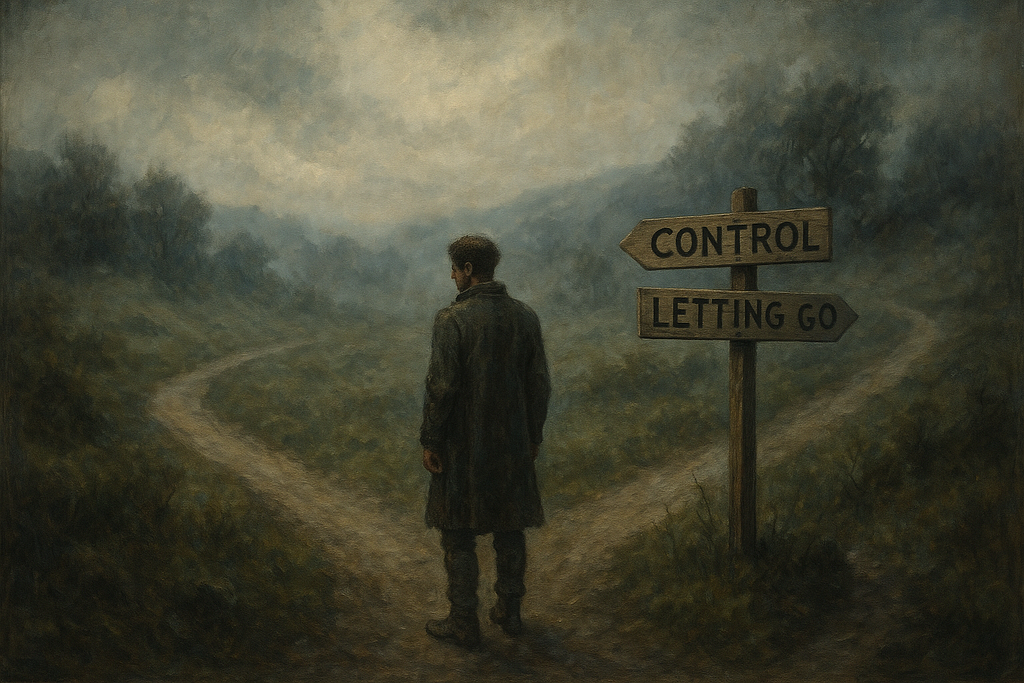
The dance between control and distance
I used to swing between two extremes. One moment I was gripping every detail; the next I was throwing the whole thing into the wind. Balance was tricky for me until I started treating it as a moment-to-moment practice, not a permanent state.
Several years ago, during my mentorship of interns, I faced a struggle: I wanted to give them space to grow, but I also wanted to ensure the work was perfect. Sometimes I let them drift without guidance. Other times, I was on top of them with way too many questions and corrections. Neither felt right. Balance is tricky to get right: it’s a dynamic that requires a fit for every unique situation.
When I got feedback like: “You should try giving more freedom”, I sometimes overcorrect. I go from micromanaging to completely hands-off and then swing back again. That is not balance, it is more like a pendulum.
Inner balance is harder when your compass is off.
My inner compass wasn’t pointing toward truth or presence; it was set on control and perfection. I believed that if I could hold everything tightly enough, nothing would go wrong. No one would see my flaws. No one would know that I sometimes felt like I wasn’t enough. That meant I didn’t just micromanage others. I micromanaged myself.
I’d lie awake at 03:17 replaying a single sentence from a meeting, my jaw clenched so hard it buzzed. I once rewrote a slide deck ten times because it had to be perfect. Each success raised the bar for the next.
This imbalance rarely shouts. It whispers through quiet exhaustion, the endless need to do more and more, just to feel okay.
The Middle Way: A Buddhist View
In Buddhism, this is known as “The Middle Way,” a path that lies between extremes. Not too tight, not too loose.
“When we hold too tightly, we create tension. When we hold too loosely, we lose connection. The art lies in holding just enough.”
This wisdom manifests in all areas of my life, from preparing talks and teaching meditation to managing teams and parenting. When I was giving my meditation lessons, I used to over-prepare my meditation classes, and they became rigid, almost like following a script. However, when I underprepared them, they felt hollow and lacked the intended point. Only in the space between structure and spontaneity did something alive begin to emerge.
Zen Story: Sona and the Sitar

Sona was a devoted monk known for his fierce diligence. He practised so intensely that his feet blistered from walking meditation, yet enlightenment felt no closer.
Frustrated, he thought, “Maybe this path isn’t for me.”
The Buddha, sensing Sona’s turmoil, asked, “Sona, when you were a householder, you played the sitar, did you not?”
Buddha “What happens if the strings are too tight?”
Sona: “They break.”
Buddha: “And if the strings are too loose?”
Sona: “They make no sound.”
Buddha: “And tuned just right?”
Sona: “They sing.”
The Buddha smiled. “Likewise, in your practice. Push too hard and you’ll break; too lax and nothing happens. Find the middle way, steady and kind.”
Sona adjusted his effort. In time, he reached enlightenment.
My Reflection
The sitar story remains one of my favourites; this story thumps like a tuning fork in my chest. Growth doesn’t come from forcing or avoiding, but from presence.
Try this simple exercise:
Take a pen.
Squeeze it hard, feel the tension, maybe pain.
Hold it loosely, perhaps too loose, and it slips away or drops.
Now hold it just right: firm, yet easy.
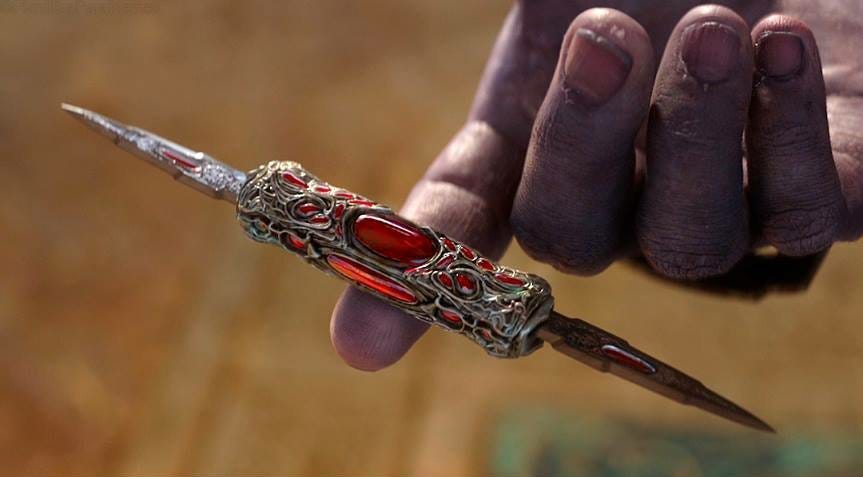
Perfectly balanced… as all things should be. -- Thanos
The same principle applies to work, relationships, creativity, and even to how we hold ourselves.
Whether in meditation, work, relationships, or creativity, the middle way invites us to calibrate, not control. But how do we calibrate ourselves, especially when our inner compass is skewed by perfectionism?
Finding Your Compass
In my case, perfectionism often sets the direction. My inner compass is tuned to high standards, driven by a need to prove that I am good enough. It shows up in how I work, lead, and even rest.
But what if your compass is pulling you in the wrong direction?
The actual practice of balance is learning to notice our extremes and steer gently back toward the centre. To do that, we first need to know what our compass points toward.
Start with your values, list the moments that made you feel (most) alive. For me, that isn’t about doing things perfectly; it’s about helping people (including myself) grow when I remember that the hold of my perfectionism loosens a bit.
“Let your heart guide you… It whispers, so listen closely” -- Walt Disney
What to Try This Week
- Pen Grip Check: Once a day, hold something (pen, steering wheel, phone) and notice if you’re gripping too tightly or too loosely.
- Quick body scan: Once a day, set a 60‑second timer, close your eyes, and sweep attention from the soles of your feet to your forehead. Wherever you notice tension, exhale and gently soften that spot before moving on.
- Compass review: List three recent moments you felt most alive, what values were you honouring?
Closing: Holding myself more gently
Balance isn’t about doing everything just right. It’s about how I hold myself.
I used to think I needed to fix my compass. Now I need to learn to listen to it gently. Sometimes, that means loosening my grip.
Other times, it means standing firm. But always, it means staying connected to what matters to me most.
And the deeper question behind all this balancing isn’t how well I manage others, or even how steadily I walk the middle path, but this:
- Can I still be worthy, even if I drop the pen?
- Can I love myself, even when I fall out of balance?
That’s the practice I’m still doing every day, again and again.
In my next blog, I’ll share more about how I’m exploring self-love, not as a destination, but as a daily practice.